
Daily market review
Growth improves, but energy bottlenecks remain
Europe and Japan grew faster than first thought, but that does not mean every business will earn more. Trade is supporting growth, while local customers are spending more cautiously. Investors also face two practical questions: can oil reach its buyers safely, and will new data centres have enough electricity? The answers affect business costs and how soon large investments start generating revenue. US stock markets reopen today after Monday’s Labor Day holiday; there was no regular trading session yesterday.
The week’s central question
Will rising energy costs prevent borrowing from getting cheaper?
What has changed since yesterday? A fuller breakdown of European growth arrived yesterday, followed by revised Japanese figures this morning. Trade is helping both economies, but domestic spending is less convincing. That distinction matters: a better overall figure does not mean local businesses are also earning more. Oil deliveries still face the heightened security risks seen over the weekend, keeping energy costs and interest rates central to this week’s outlook.
What limits price rises? Spending in Europe is growing slowly, making it harder for companies to raise prices.
What comes next? An updated energy outlook and the European Central Bank’s interest rate decision.
1 Energy and geopolitics
Oil production plans are unchanged, but safe delivery remains a problem
Facts
Getting oil safely to buyers currently matters as much as producing it. On 5 September, the US military reported strikes on Iranian tankers. On Sunday, seven oil-producing countries agreed to keep October’s production targets unchanged from September. That agreement does not tell us how much oil will actually reach its buyers.
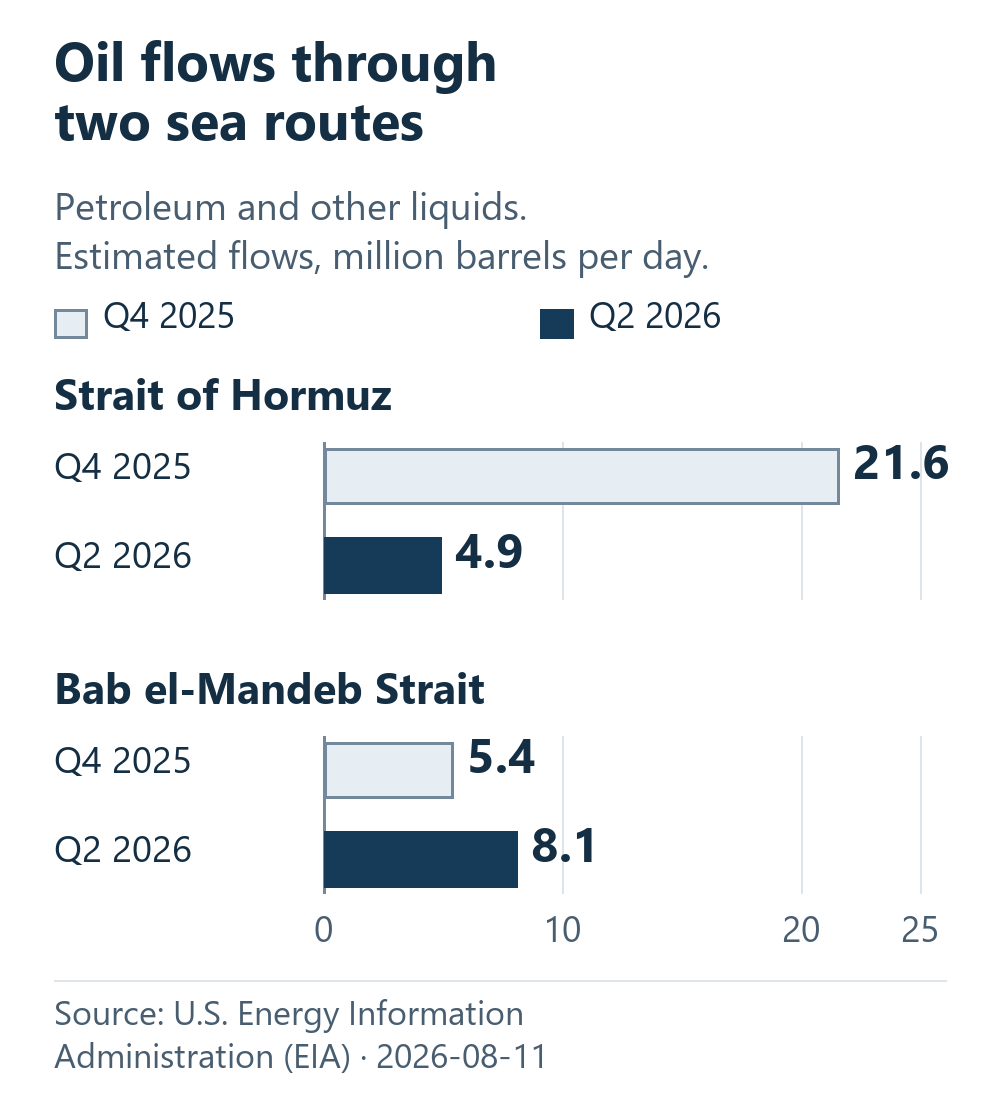
Earlier data show the scale of the disruption. According to the US Energy Information Administration’s August estimates, second-quarter oil and liquid petroleum product flows through the Strait of Hormuz were roughly 77% below the previous year’s final quarter. This compares quarters, not today’s traffic. The August outlook expected a gradual recovery in September, but that depends on security.
Why it matters
A longer or less safe journey can make delivery more expensive even when production plans are unchanged. Fuel and transport costs then rise. If businesses pass them on to customers, inflation eases more slowly and central banks find it harder to lower interest rates.
Portfolio impact
Producers that can export safely may earn more from higher oil prices. For airlines and hauliers, dearer fuel reduces profit unless they can charge customers more. Long-term bond prices also face pressure if inflation keeps interest rates high for longer.
Opportunity and risk
Restoring reliable supplies could reduce fuel and delivery costs. The risk is that production plans and actual exports remain different. The energy outlook on 9 September will be an opportunity to see whether a September recovery is still expected.
2 Europe’s economy
The euro area grew faster, but consumer spending improved much less
Facts
The better euro area growth figure does not show a surge in consumer spending. Yesterday, the European statistics office revised second-quarter growth from 0.4% to 0.6% compared with the first quarter. This measures the change in economic output after adjusting for prices and seasonal patterns, not the position in September.
Exports less imports made the largest contribution, adding 0.9 percentage points. Household spending added 0.2 percentage points. Changes in inventories reduced overall growth, while investment in fixed assets contributed almost nothing. These figures show how much each component contributed to economic growth, not the percentage increase in exports or spending itself.
Why it matters
Trade can improve the overall result even when imports fall. Better growth alone therefore does not show that people are buying more. For shops, restaurants and construction businesses, the more useful question is whether their customers’ incomes and spending are increasing.
Portfolio impact
Foreign orders, trade barriers and the euro’s exchange rate matter greatly to exporters. Companies serving local consumers need household incomes to rise faster than prices. Weaker domestic demand could help euro area bonds if inflation also slows.
Opportunity and risk
Stronger spending would allow more businesses to share in the growth. More expensive energy, however, would leave households with less money for other purchases. On 10 September, the European Central Bank’s assessment of growth and the outlook for prices will matter.

Financial independence calculator
How much would you need to save?
Enter your target monthly income and current savings. See the gap and how changing your saving period affects the result.
Results depend on your assumptions, not guaranteed returns.
3 A longer-term perspective
A power shortage can delay data centre expansion even when customers are waiting
Facts
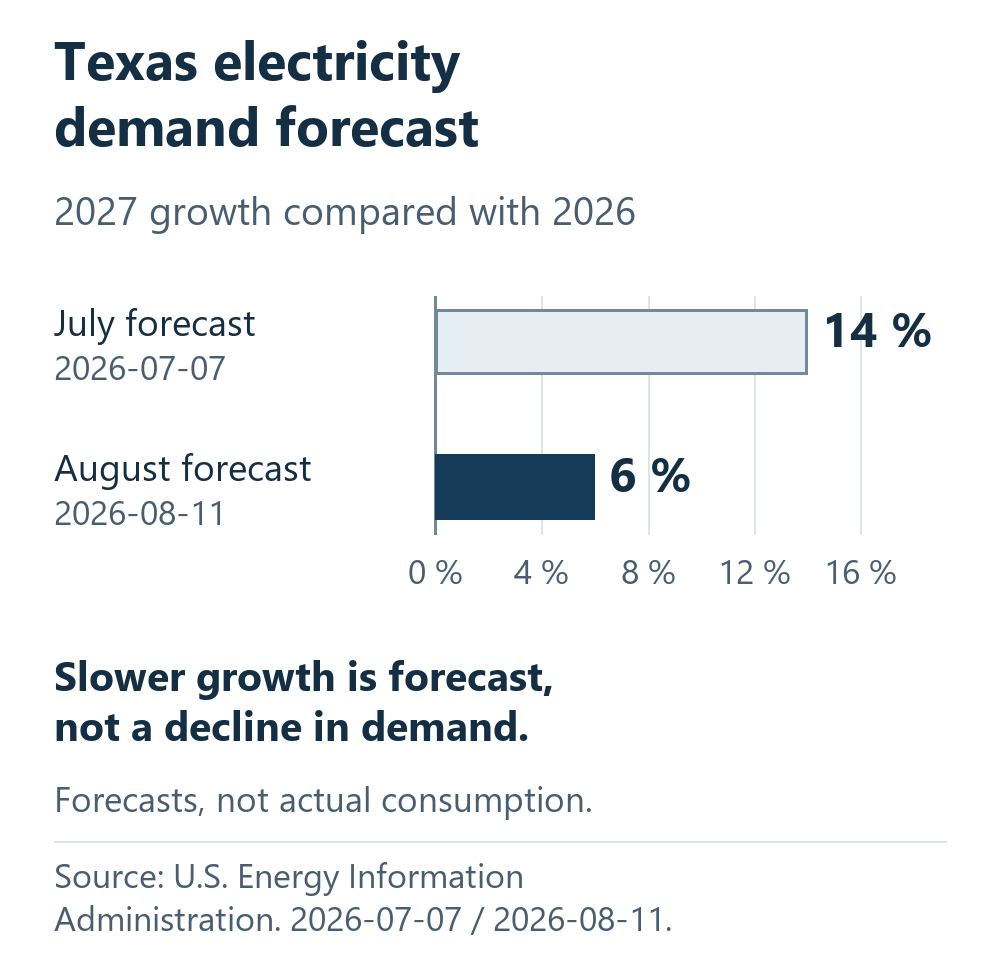
A data centre needs more than a building, equipment and customers: it needs a reliable power supply. On 3 August, the Texas governor ordered checks on these projects before they could proceed. They must establish where electricity and water will come from and who will pay for the infrastructure. Following that decision, the US Energy Information Administration lowered its forecast for growth in Texas electricity demand next year from 14% to 6%. August brought a lower growth forecast, not a fall in actual consumption.
Delays matter because the sums being invested are enormous. E-commerce and cloud computing company Amazon spent $54.2 billion in cash on property and equipment in the second quarter. Over the same period, its operations generated $45.4 billion in cash flow. Investment spending was roughly a fifth higher. These are company-wide figures, not spending on artificial intelligence projects alone.
Why it matters
Equipment is paid for before a data centre starts earning money. A delayed grid connection means a longer wait for revenue and a slower return on that investment. Even strong demand for services therefore does not guarantee rapid profit growth.
Portfolio impact
Suppliers of transformers, cooling systems and grid equipment may receive more orders from this expansion. Technology companies facing delays must wait longer for the money spent to start earning a return. A technology share fund and infrastructure suppliers’ shares will not necessarily benefit at the same time.
Opportunity and risk
A faster grid connection would allow services to begin sooner. But buying equipment alone does not guarantee a profitable operation. An updated energy outlook is due on 9 September; project reviews and companies’ subsequent cash flow reports should provide further evidence.
4 Japan and currencies
Japan’s economy grew more than first estimated, but business investment fell
Facts
Japan’s growth figures improved, but businesses remained cautious about expansion. This morning, the government revised second-quarter growth from 0.3% to 0.4% compared with the first quarter. The figures are adjusted for prices and seasonal patterns. Domestic demand still detracted slightly from overall growth, while trade supported the positive result.
Business investment in non-residential assets fell by 0.9% over the quarter. That was a smaller decline than previously estimated, but investment did not grow. Today’s release updates a past quarter; it is not a new Bank of Japan interest rate decision.
Why it matters
Businesses investing less may place fewer orders with local suppliers. Even so, a single quarter does not establish a lasting downturn. When assessing interest rates, the Bank of Japan will need to consider whether rising wages and spending can support growth alongside exports.
Portfolio impact
The figures imply different prospects for exporters and companies serving Japanese consumers. For someone investing in euros, the yen’s exchange rate also matters. Without currency hedging, a weaker yen can reduce an investment’s euro value even if the share price in yen stays unchanged.
Opportunity and risk
A recovery in investment would help both exporters and their domestic suppliers. More expensive energy imports could instead weaken consumer spending. Wage and spending figures, together with Bank of Japan comments, should offer a clearer guide than this growth revision alone.
Today’s portfolio compass
Better growth figures do not tell us which businesses will earn more
Today, it is worth looking beyond the growth figure to what is driving it. In Europe and Japan, trade is helping more than domestic demand, so local businesses may feel the improvement later. Technology companies need electricity before new data centres can generate revenue. Oil markets need safe routes to bring supplies to buyers. High energy costs and interest rates staying elevated for longer can reduce profits and delay the payback on investment. More reliable supplies and stronger consumer spending would ease those risks. For shares, the question is how companies manage their costs; for bonds, it is whether inflation will allow interest rates to fall. Exchange rates also affect returns on investments outside the euro area.
Important. This is general market analysis, not a personal investment recommendation. The scenarios discussed may not materialise. Investments can lose value, and past performance does not guarantee future results.