
Week · Market review
15–21 September: central banks tightened while demand held up
The seven-day picture delivered conflicting signals. Chinese industry outpaced consumption. The Federal Reserve raised rates, Europe implemented an earlier increase, the Bank of England narrowly held and Japan lifted its guideline on Friday. US sales and labour demand held up, but import prices and European energy costs intensified the question of how much revenue will become profit.
Period covered: 2026-09-15 – 2026-09-21Information as of 4 min read
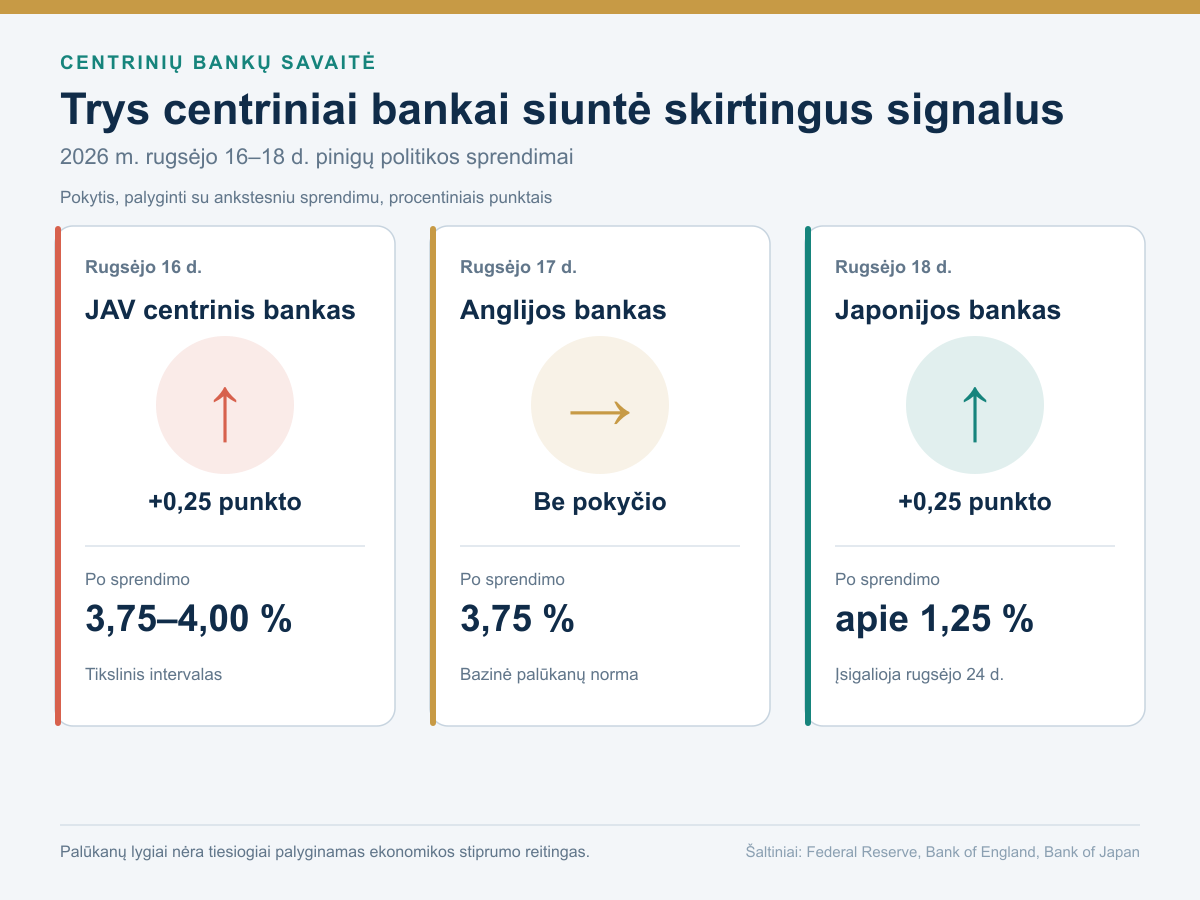
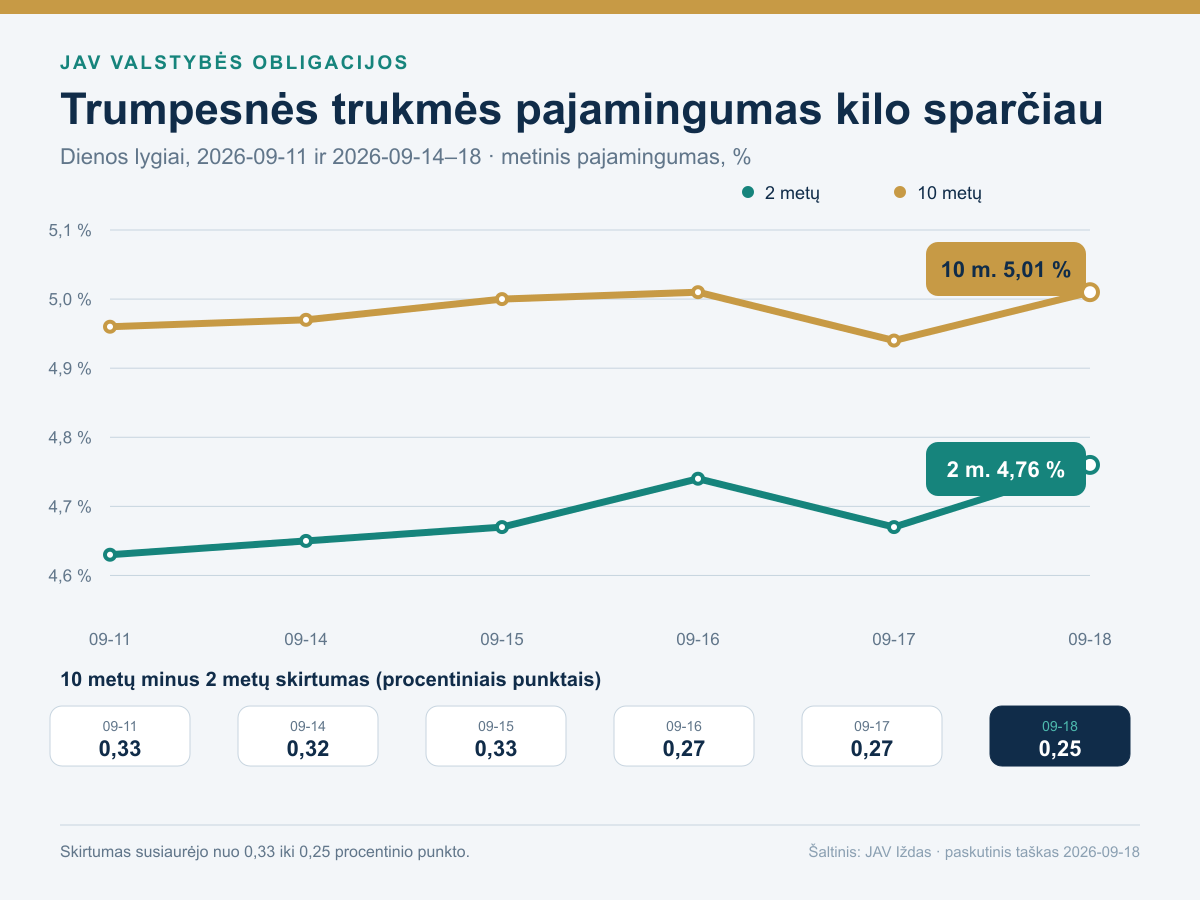
Since the previous information cutoff, the most important confirmed change came on 18 September: the Bank of Japan voted 7–2 to raise its overnight-rate guideline to about 1.25%, effective 24 September. Friday US Treasury estimates ended the week at 4.76% for two years and 5.01% for ten, narrowing the spread to 0.25 percentage points. By 07:00 on 21 September, China had supplied CNY165 billion of seven-day liquidity at 1.40%, while Sunday's lending benchmarks remained 3.00% and 3.50%.
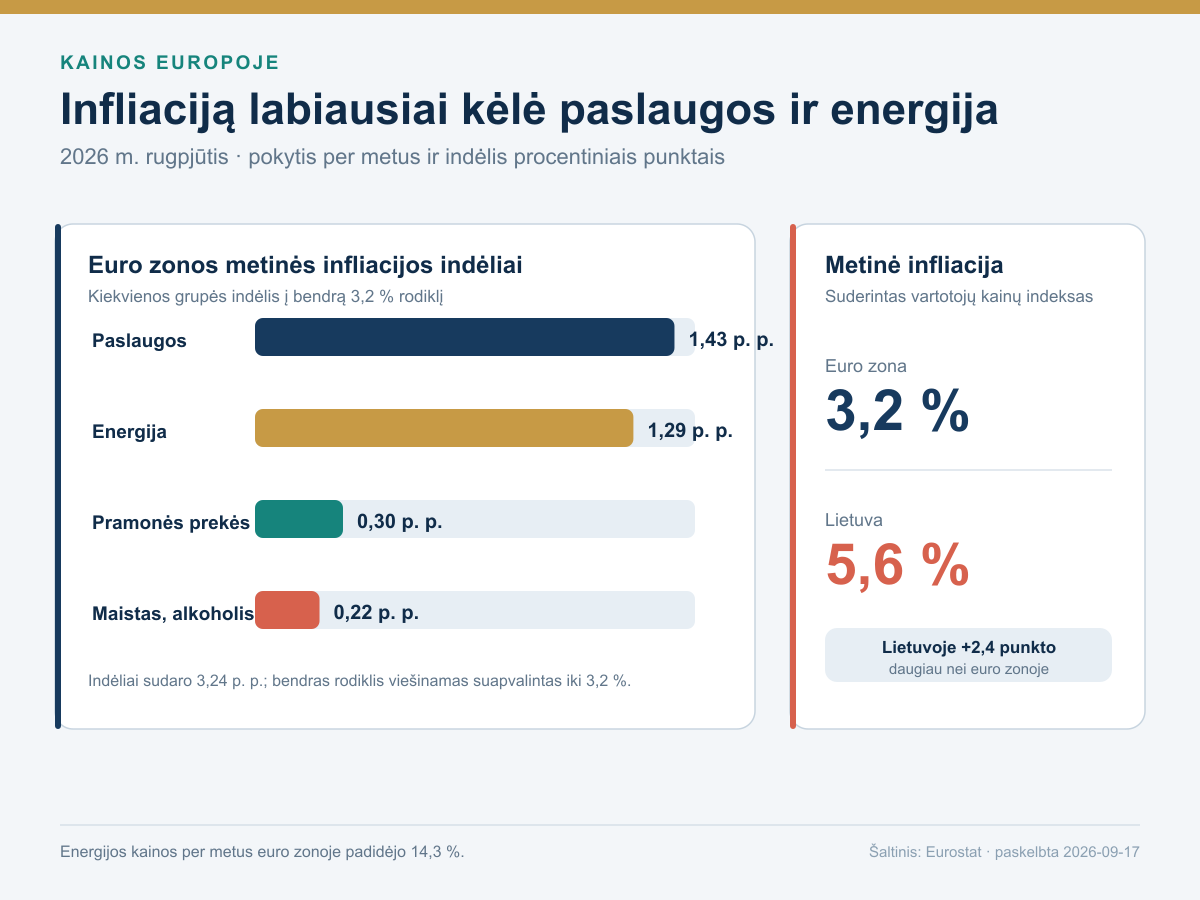
The longer-horizon conclusion is unchanged: the key question is not one central-bank headline but whether revenue growth leaves more profit after energy, imported inputs and debt costs. China's short liquidity operation is not proof of a consumer recovery. One yield-curve observation does not guarantee the direction of the economy, and inflation of 3.2% in the euro area and 5.6% in Lithuania does not mean every item rose equally.
Week
What happened
15 September: Chinese production and consumption diverged
China’s August industrial output was 5.2% higher than a year earlier, while retail sales rose only 0.4%. High-tech manufacturing increased 16.7%. Supply and production were moving faster than the domestic consumer. Sunday’s unchanged lending benchmarks and Monday’s short liquidity provision do not solve that imbalance by themselves.
16 September: US rates and projections moved higher
The Federal Reserve unanimously raised its federal-funds target range by 0.25 percentage points to 3.75–4.00%. The median participant projection for the end-2026 rate midpoint rose from 3.8% in June to 4.1%. These are conditional participant assessments, not futures-implied odds and not a promise.
August US retail sales rose 1.2% during the month, while import prices increased 0.7%. One shows resilient nominal demand; the other points to potential cost pressure. For a company, the question is whether revenue growth exceeds the bill for imports, energy and finance.
17 September: Europe and the US showed a mixed combination of prices and demand
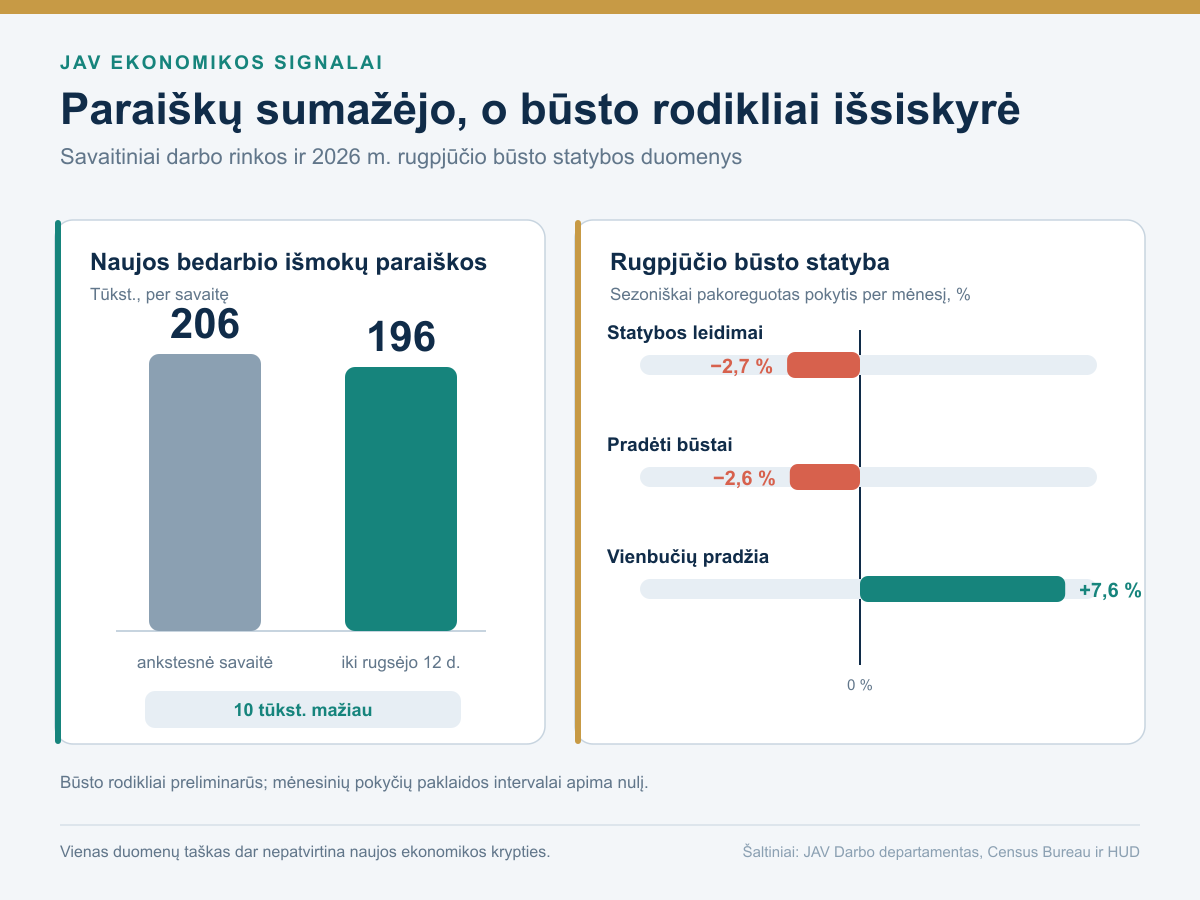
Final August inflation was 3.2% in the euro area and 5.6% in Lithuania. The Bank of England held its policy rate at 3.75% by six votes to three, with three members preferring 4.00%. New US unemployment-benefit claims were 196,000. Together, these facts show no abrupt demand break, but continued price risk still limits hopes for cheaper credit.
18 September: Japan raised rates and the US curve narrowed
The Bank of Japan lifted its overnight guideline to about 1.25%, effective 24 September. Friday’s US Treasury estimates were 4.76% for two years and 5.01% for ten. Since the previous Friday, the shorter yield rose 0.13 points and the longer one 0.05 points, narrowing the spread to 0.25 points.
The portfolio link across the week is financing maturity and pricing power. Shorter-dated bonds respond more directly to expectations for high policy rates, while longer maturities also reflect future inflation and growth. Higher lending rates can support a bank’s income, but they also increase the risk that weaker customers cannot repay. For an exporter, the exchange rate is only one part of the result: if energy, imported inputs and credit costs rise faster than selling prices, revenue growth does not necessarily become profit growth.
The weekly conclusion is not a call to choose one country or sector. It is a prompt to test company-level numbers: net debt, the next refinancing date, interest expense and operating margin. In bonds, maturity and credit quality matter alongside the largest quoted yield. Currency moves can either amplify or soften the euro result. The clearest evidence that would change the thesis would be falling inflation, lower short-dated yields and final demand remaining resilient at the same time.
? Why are a policy rate and a bond yield different?
A central bank sets a short-term policy guideline. A bond yield is determined by its market price, maturity and expectations for future inflation, growth and policy. They can therefore move differently after a decision.

Investment consultation
Do your investments work together?
Review where your money is invested, how much depends on a single market and whether your plan fits your goals. Leave with clearer next steps.
See the consultation process and terms on the registration page.
Week
What matters now
What matters now: different rate paths return attention to profit and debt maturity
The Monday 07:00 picture is not one simple risk-on or risk-off story. China supplied short-term liquidity without changing its main lending benchmarks. Japan raised rates on Friday, while the US two-year yield ended the week higher. Energy and services remained the largest contributors to euro-area inflation. Cash-rich companies and shorter-maturity bonds therefore face a different risk from highly indebted growth businesses or long-duration bonds.
In equities, revenue growth needs to be separated from profit growth: a 1.2% increase in US retail-sales dollars says nothing by itself about volumes or margins. In bonds, investors should compare the 5.01% ten-year yield with the 4.76% two-year yield and their different duration risk. Yen and dollar moves can further change the euro return for a Lithuanian investor. The opportunity is easing cost pressure without a collapse in demand; the risk is that higher input and borrowing costs hit profit together.
Week
What comes next
What comes after Monday morning?
- China’s transmission into the real economy. We will look for unchanged loan benchmarks and short liquidity to show up in orders, consumption and property financing.
- The Bank of Japan’s new rate taking effect on 24 September. The important evidence is not one currency minute but the response of banks, bonds and yen-funded positions after implementation.
- US labour data and the next euro-area inflation estimate on 2 October. They will help distinguish resilient demand from inflation that keeps rates high for longer.
No next-meeting Fed probability has been invented from memory. A current official CME table reading was not reliably captured before the cutoff, so no number is presented as a Federal Reserve forecast or promise.
Important. This is general market analysis, not a personal recommendation to buy or sell. Historical data and company results do not guarantee future returns. Forecasts and conditional scenarios may not materialise.
How is the history preserved and updated?
All five periods in this edition share one information date. Week means the latest 7 days, quarter means 90 days, and year means the trailing 12 months. The next dated edition will have a separate URL. This text keeps its date and assessment; later events are not silently inserted into an older edition. Longer periods assess new evidence alongside earlier developments without repeating every headline.