
Week · Market review
16–22 September: lower real yields met pressure on profit
Central banks tightened along different paths during the seven-day period, but long and real US yields fell at the end. That helped long-duration valuations. ECB energy and company research supplied the counterweight: cost pass-through is faster and profit expectations are weak. South Korea’s Tuesday operation was temporary liquidity rather than a rate cut.
Period covered: 2026-09-16 – 2026-09-22Information as of 5 min read
Three things changed since the previous cutoff. On 21 September, the US ten-year nominal yield fell to 4.96%, the real yield to 2.62%, and the S&P 500 rose 1.49%. The ECB published evidence that gas-price moves reach consumers faster and that company cost expectations greatly exceed profit expectations. Before 07:00 on 22 September, the Bank of Korea supplied KRW34.00 trillion in 14-day liquidity without cutting its policy rate.
The longer-horizon conclusion is unchanged: a lower yield alone does not guarantee higher equity profit or a safe bond return. Investors still need to separate the real discount rate, inflation compensation, credit quality and a company’s ability to pass on energy and labour costs. Temporary central-bank liquidity is not the same as a recovery in final demand.
Week
What happened
16 September: the US raised rates while consumption still held up
The Federal Reserve unanimously raised its federal-funds target range by 0.25 percentage points to 3.75–4.00%. August retail sales, released the same day, were 1.2% higher than in July, while import prices rose 0.7%. Nominal demand remained resilient, but companies faced a larger bill for imported goods and finance at the same time.
17–18 September: Europe retained rate risk and Japan tightened
Final August inflation was 3.2% in the euro area and 5.6% in Lithuania. The Bank of England held its rate at 3.75% by six votes to three. On 18 September, the Bank of Japan raised its overnight guideline to about 1.25%, effective 24 September. Regions moved at different speeds, but none delivered a simple message that money would soon become cheaper everywhere.
21 September: long and real US yields fell
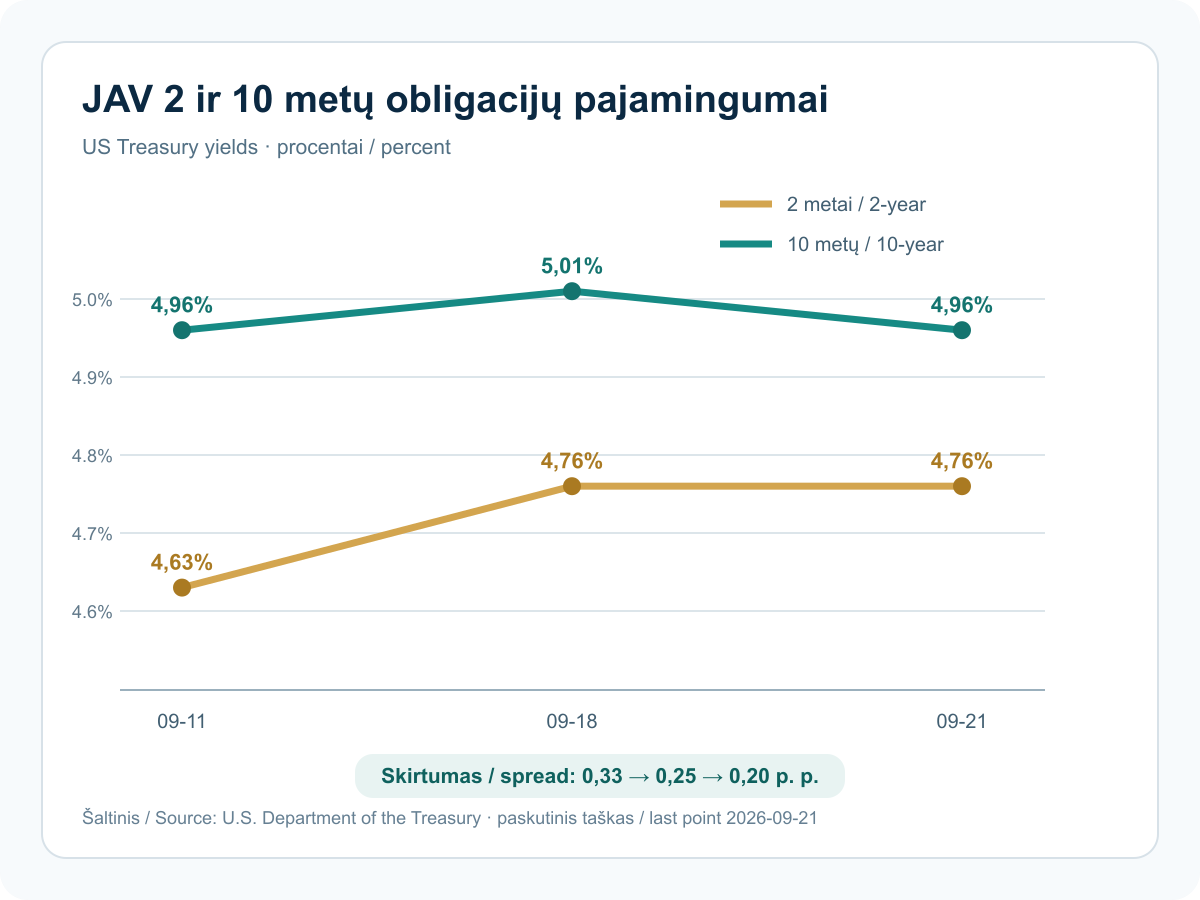
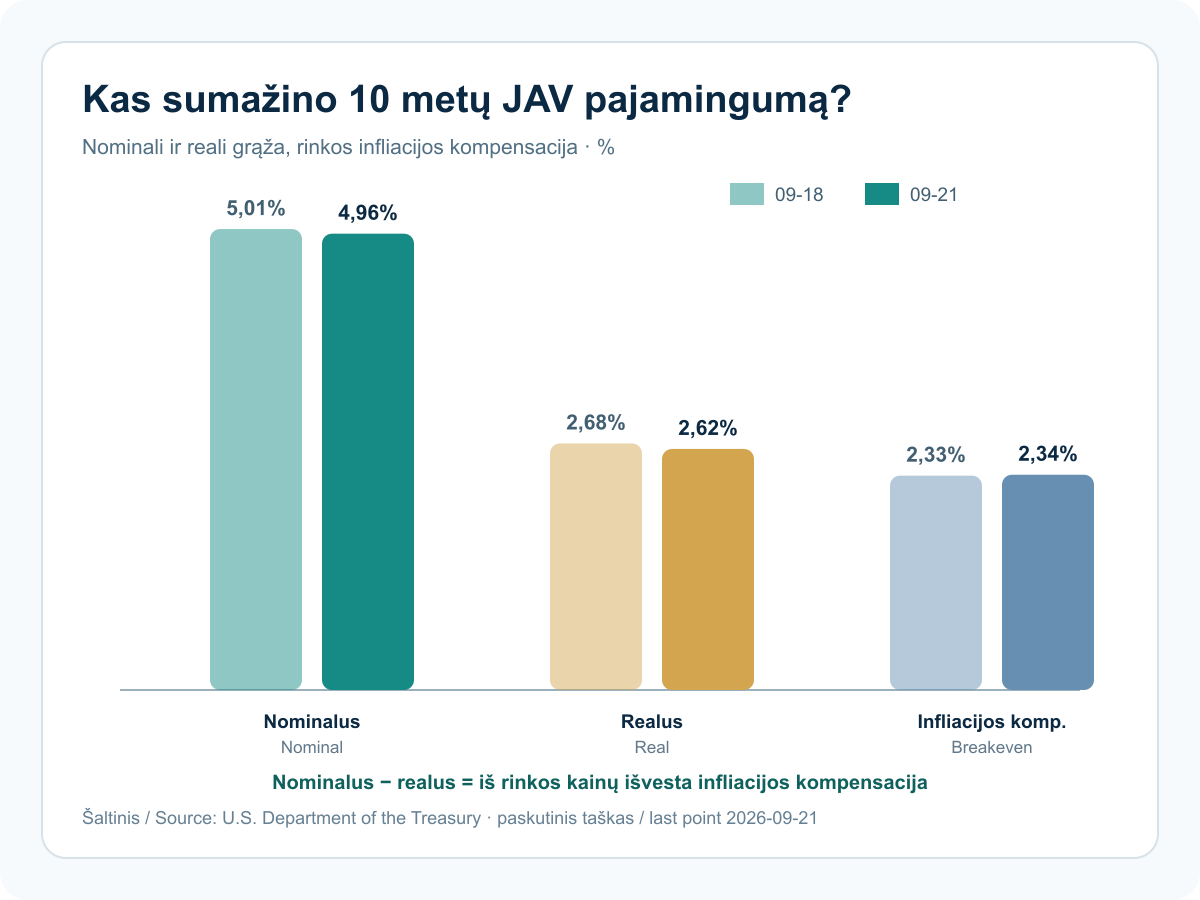
On Monday, the US two-year yield stayed at 4.76%, the ten-year yield fell to 4.96%, and the ten-year real yield declined to 2.62%. The ten-minus-two-year spread narrowed to 0.20 percentage points. The S&P 500 rose 1.49% in the same session. A lower real discount rate supports long-duration valuations, but one day of coincident moves does not prove a single cause.
21 September: the ECB showed faster energy pass-through and weaker profit expectations
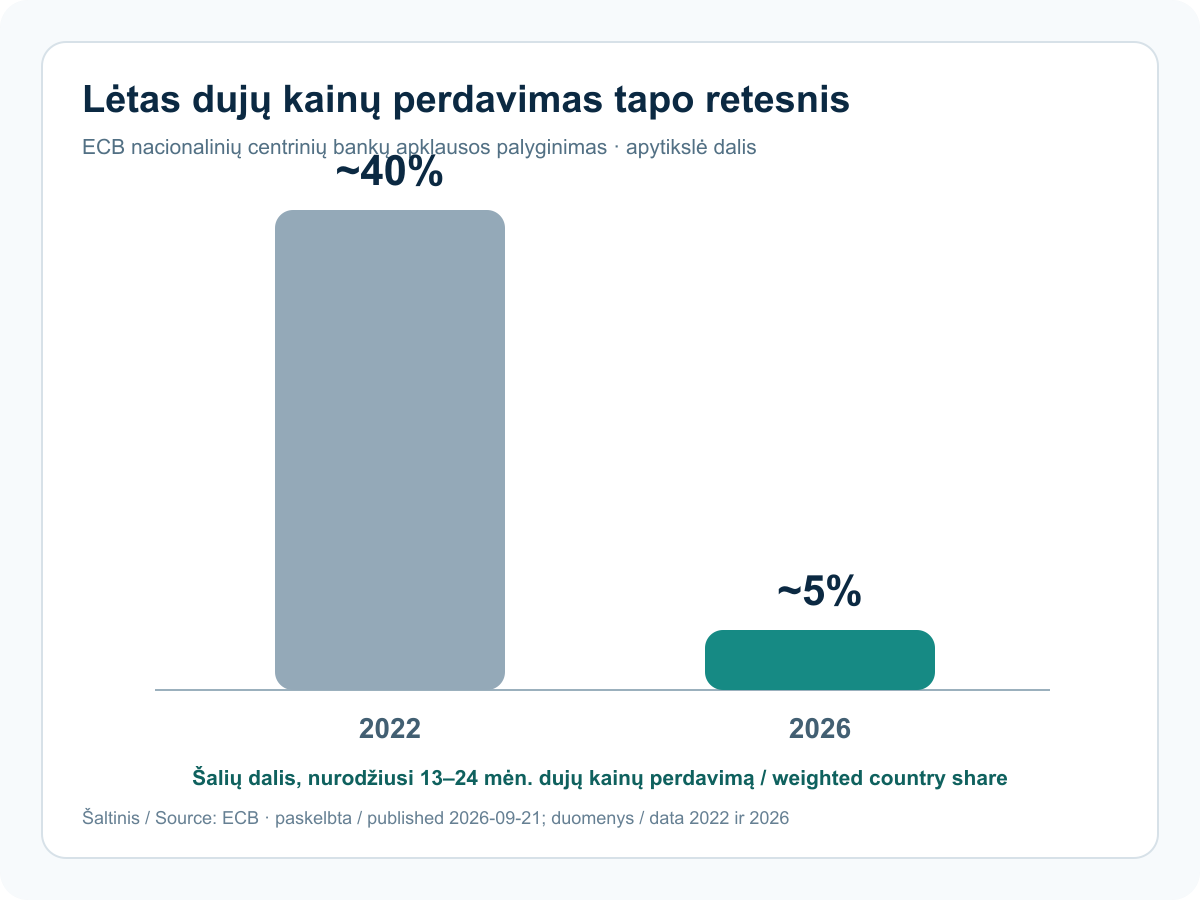
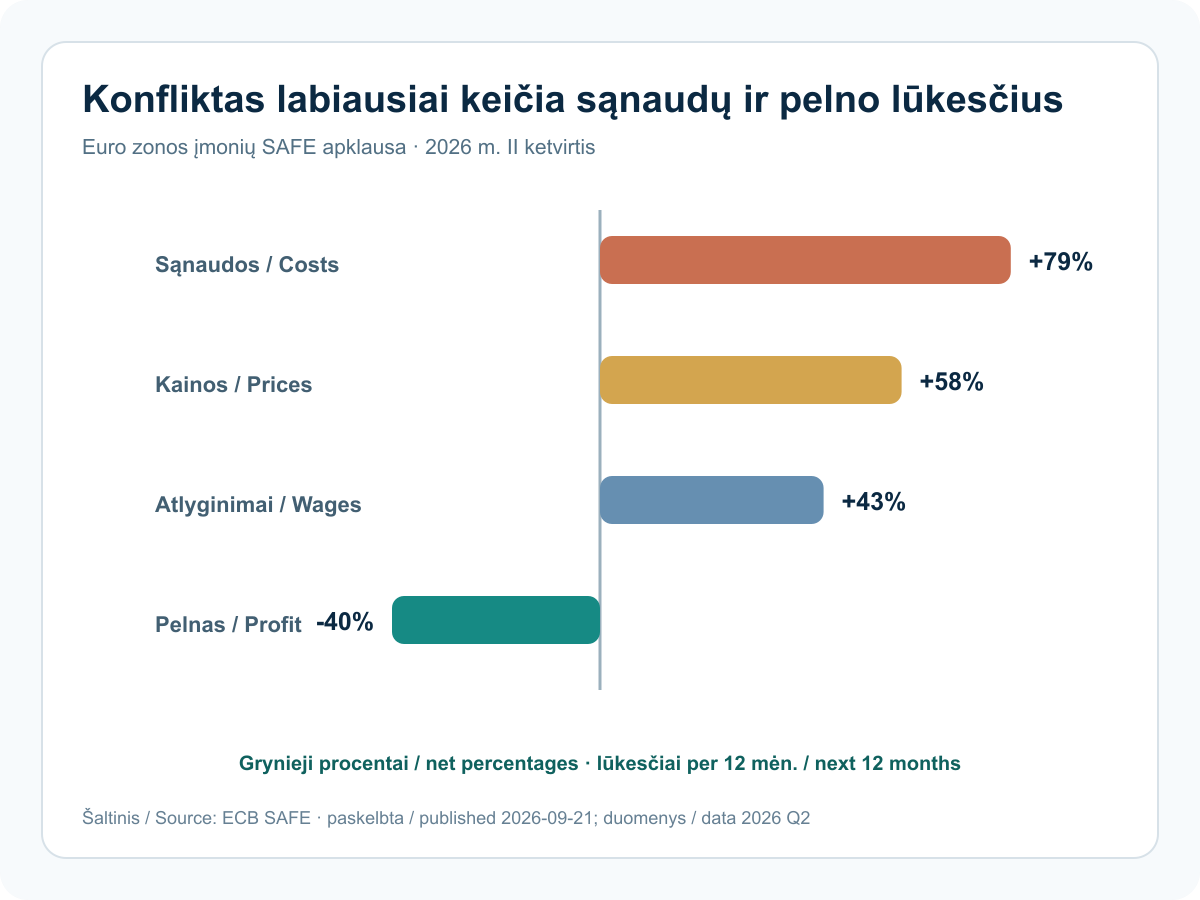
An ECB analysis showed that wholesale gas-price changes now reach consumers more often within the first twelve months. The share reporting a 13–24 month lag fell from roughly 40% in 2022 to roughly 5%. In a separate publication, company-expectation net balances were +79% for costs, +58% for selling prices, +43% for wages, −40% for profit and −14% for demand. The survey was conducted in the second quarter, so these are expectations rather than realised September results.
The portfolio link is the tension between the discount rate and profit margins. A lower real yield can lift long-duration bond and growth-equity valuations. Faster energy pass-through and a weak profit balance can offset that benefit if costs actually rise. Companies with pricing power and high-quality fixed-rate bonds can benefit from a friendlier discount rate. Businesses with high debt, thin margins or intensive energy use remain more vulnerable.
22 September before 07:00: South Korea supplied KRW34 trillion in temporary liquidity
On Tuesday morning, the Bank of Korea accepted KRW34.00 trillion in 14-day repo bids at an average 3.00%. That closes this rolling seven-day edition’s data window, but it is not a policy-rate cut. The next signal is whether the operation needs to be repeated after 6 October. If the need fades, the measure was technical; if it recurs, bank-funding risk becomes more important.
? Why can a policy rate and a market yield move differently?
A central bank sets a short-term policy guideline. A bond yield reflects its market price, maturity and expectations for future inflation, growth and policy. A ten-year yield can therefore fall shortly after a policy-rate increase.
The weekly verdict is not a call to choose one asset class. It shows which figures need to be compared: profit margin with selling prices in equities, real yield with duration in bonds, and liquidity with loan quality in banks. Currency remains relevant for a euro investor. The thesis would change if several weeks of data showed that lower real yields were accompanied by stable demand and realised profit rather than only fears of weaker growth.

Professional portfolio management
A plan for your portfolio. No rush.
Let’s discuss your goals, risk tolerance and time horizon. Find out how your portfolio would be built and managed.
The first conversation is free, with no obligation.
Week
What matters now
What matters now: a lower real return helps valuations, but profit risk remains
The new pre-07:00 liquidity fact came from South Korea. Yesterday’s US combination was broader: the ten-year nominal yield fell to 4.96%, the real yield to 2.62%, and the S&P 500 rose 1.49%. That temporarily eases pressure on long-duration bonds and growth-equity valuations. Inflation compensation nevertheless stayed around 2.34%, so one session did not show that price risk had disappeared.
The ECB’s energy and company research provides the counterweight. A gas shock can reach consumers sooner, while surveyed companies expect costs and wages to rise more often than profit. Equity portfolios therefore need to compare selling prices with margins, bonds need maturity alongside credit quality, and regional positions need currency-adjusted returns. The opportunity would be falling real yields with resilient realised earnings. The risk would be renewed energy inflation and the negative profit expectations becoming actual results.
Week
What comes next
What comes next?
- Japan’s new rate taking effect on 24 September. The response of banks, bonds and yen-funded positions after implementation will matter more than one currency minute.
- Continuity of South Korean liquidity. The 14-day operation matures on 6 October and will show whether this was a one-off technical need or requires renewed funding.
- Actual company margins and the macro data due on 2 October. US labour figures and euro-area inflation will test whether lower real yields can coexist with resilient demand.
No next-meeting Federal Reserve probability has been invented from memory. A current official CME FedWatch table reading was not reliably captured before the cutoff, so no number is presented as a Federal Reserve forecast or promise.
Important. This is general market analysis, not a personal recommendation to buy or sell. Historical data and company results do not guarantee future returns. Forecasts and conditional scenarios may not materialise.
How is the history preserved and updated?
All five periods in this edition share one information date. Week means the latest 7 days, quarter means 90 days, and year means the trailing 12 months. The next dated edition will have a separate URL. This text keeps its date and assessment; later events are not silently inserted into an older edition. Longer periods assess new evidence alongside earlier developments without repeating every headline.